
Round Tin Can RFQs: Plan a Label Placement Trial
For a round tin can label trial, identify the exact tin and colour, mark the proposed lid or body area, and review an actual label on an identified sample. Approve the artwork version and placement separately from the tin itself, then state who supplies and applies the label.
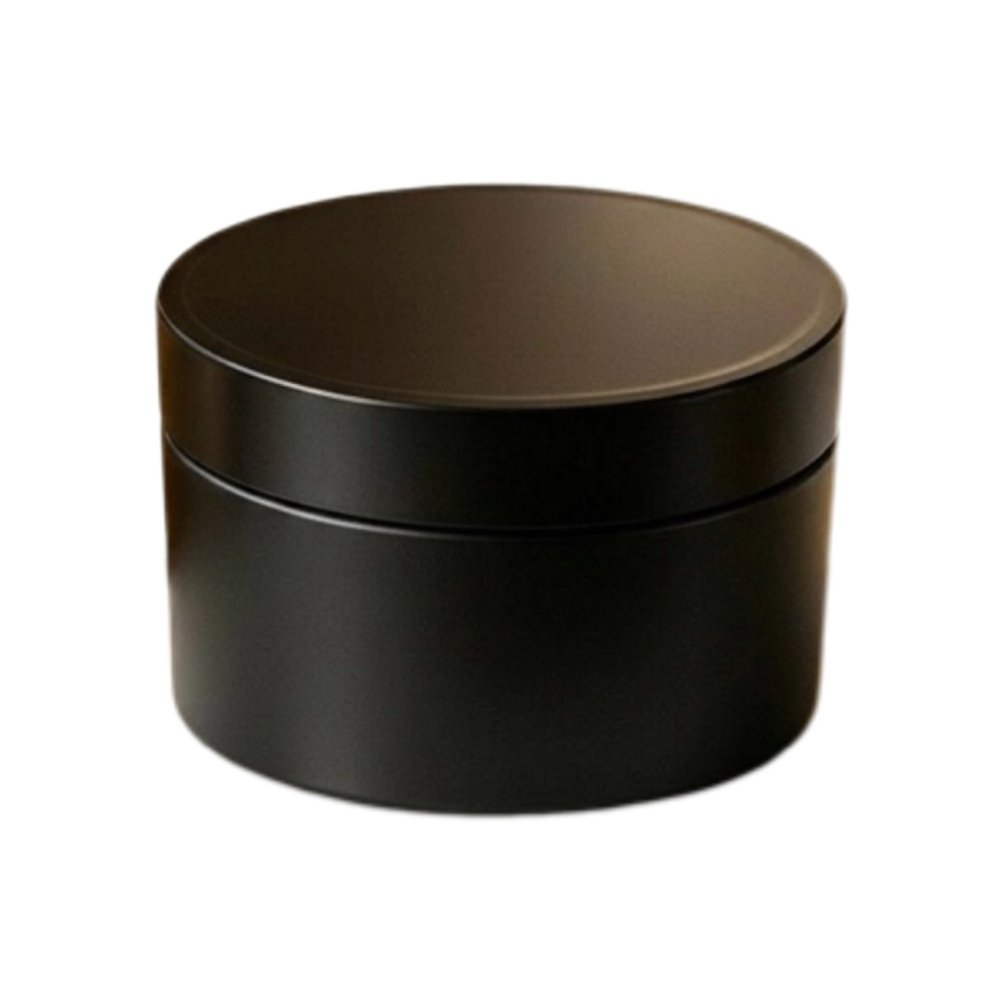
Black round tin can from the inspected product gallery. Its visible lid and body help discuss a proposed label area; the image supplies no approved artwork dimensions.
Choose the tin before placing the artwork
A round lid looks like a simple place for a logo until the artwork reaches the rim or the body label crosses the opening boundary. For buyers comparing wholesale tin boxes, a useful next step is a placement trial on the exact proposed tin. This resolves an artwork task separately from general box selection or closure inspection.
Rongchang Packaging’s Round Tin Can listing states a diameter of 8.5 cm, height of 5 cm, weight of 49 g and material of tinplate. It names red, black, silver and white colour options. These are supplier-published fields. They identify a starting point for an enquiry; the listed diameter and height are not an approved label size or a measured print area.
Separate the lid area from the body area
Begin with an unmarked catalogue image and a separate annotated copy. Mark whether the proposed artwork belongs on the top face, the cylindrical body or both. Give each area its own reference. A round top label and a body wrap create different placement questions, so a single instruction to “add our logo” leaves too much for the recipient to interpret.
Ask the supplier which physical sample represents the quoted colour and finish, and how it can be made available for the trial. Request the relevant surface measurements and their measurement points. Do not generate a final label outline by multiplying the catalogue diameter or by assuming the entire quoted height is available on the body. Rims, overlap and the actual surface shape need to be identified on the reviewed item.
Top reference: intended position within the visible lid face.
Body reference: label location relative to the lid edge and any identified seam.
Opening reference: whether the design is intended to cross the lid-body boundary.
Red gallery presentation for the Round Tin Can listing. A colour presentation is a reference for the proposed trial, not proof that a label has been tested on this version.
Make the trial request easy to answer
Send the artwork as a versioned file together with a placement sketch. If the label artwork is still provisional, label it as such. Ask for a response against the proposed arrangement rather than a general statement that a logo is possible. The following table is a buyer’s planning format, not a service or performance specification offered by the listing.
Trial item
Buyer identifies
Response to obtain
Tin reference
Listing, colour and sample ID
Quoted version represented by that sample
Artwork area
Top or body sketch
Surface measurements and reference points
Label version
File ID and proposed outline
Trial arrangement using that exact version
Responsibility
Requested supply/application arrangement
Who provides and applies each item
Review placement on a physical sample
A flat artwork file cannot show how a body label sits around the actual can. Review the intended label on an identified sample, with its orientation clearly recorded. Look at the position from the front and from the top, and note whether important text approaches an edge or disappears around the curve. Use the review to decide placement rather than changing the design silently during application.
If the label is meant to remain entirely on the body, check the proposed location with the lid in its ordinary position. If a design deliberately crosses the opening boundary, describe that purpose and review what happens when opening the sample. Do not treat the presence of such a label as proof of tamper evidence. Any functional requirement needs an agreed method appropriate to that requirement.
White gallery presentation shows the lid-to-body boundary. Label placement and any opening requirement need their own identified sample review.
Record appearance and application separately
The gallery shows different colour presentations. Save the selected colour reference with the sample identity so that a trial on one presentation does not automatically approve another. The listing’s matte and fingerprint-related descriptions are supplier statements, not label compatibility evidence. Ask about the actual proposed surface and use the chosen label material in the trial.
A successful position check also does not establish long-term adhesion. If handling, storage or transport conditions matter to the buyer, set out those conditions and agree the relevant evaluation separately. Keep this article’s placement record focused on observable location, orientation and artwork identity. That makes the record useful without stretching a visual review into a performance claim.
State what the quotation includes
Before approving an order, specify whether the enquiry requests tins only, separately supplied labels or an applied-label arrangement. Ask the supplier to confirm the arrangement actually available and the party responsible for each step. The inspected page does not establish label printing or application as an included service.
Connect the accepted sample photographs, artwork revision and placement sketch to the quotation version. Preserve the unmarked tin reference as well. A later artwork change should reopen the affected placement decision rather than replacing the approval file without explanation. Send the proposed tin reference and application questions through the Rongchang contact page.
Round tin label trial questions
Can the listed diameter become the label diameter?
No. The page does not define a usable label area. Request the relevant surface measurements and review the proposed outline on the actual sample, including the rim and chosen placement.
Does one colour sample approve all colour versions?
Keep the selected colour and finish linked to the trial. Obtain a specific response before applying that decision to another presentation, especially when the proposed surface or label changes.
Is label application included with the tin?
The inspected listing does not say that it is. Ask who supplies the labels, who applies them and which arrangement the quotation includes. Record the answer alongside the approved artwork version.
Round Tin CansLabel PlacementB2B Packaging