
Triangular Gift Boxes: Specify the Printed PVC
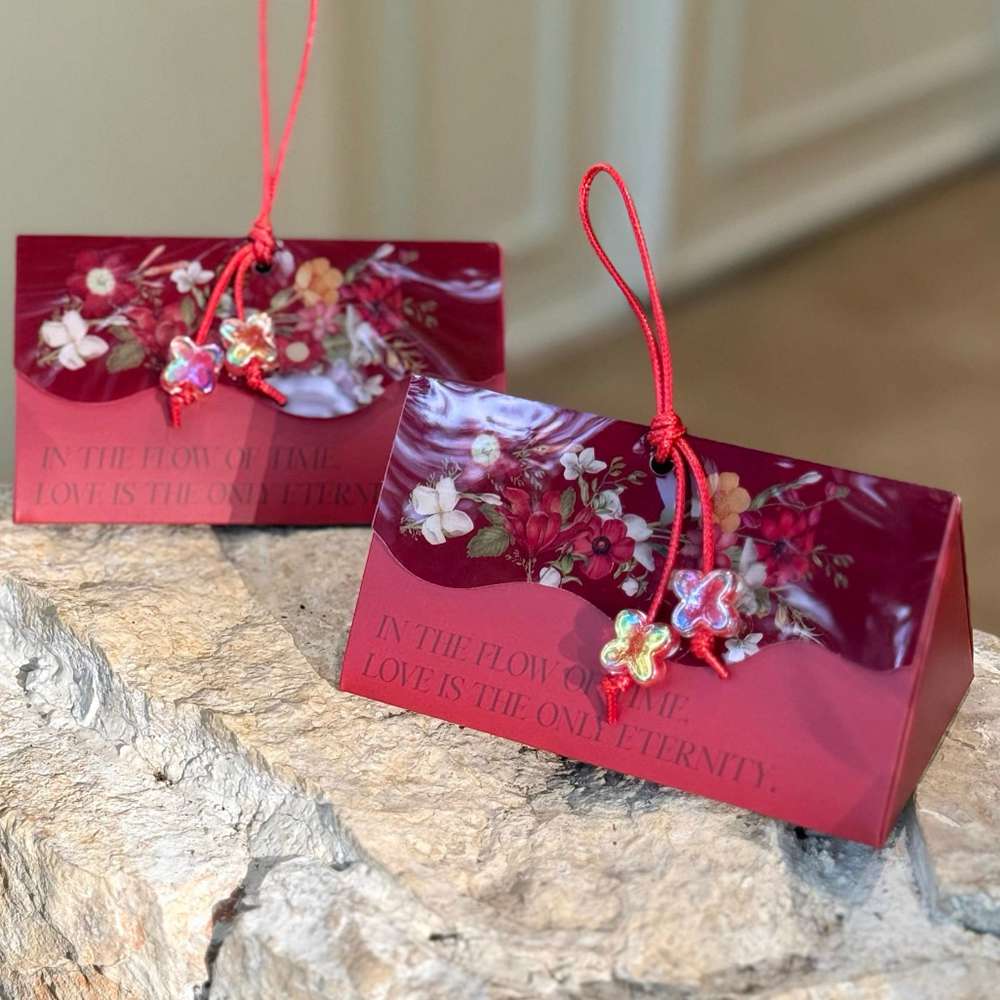
For a triangular paper gift box with a printed transparent PVC sheet, ask the supplier to map the film and cardstock areas on the offered box. Identify the printed zones, any clear viewing areas and the artwork orientation when assembled. Approve that component layout before treating a catalogue image as a production reference.
Start with the material the supplier actually names
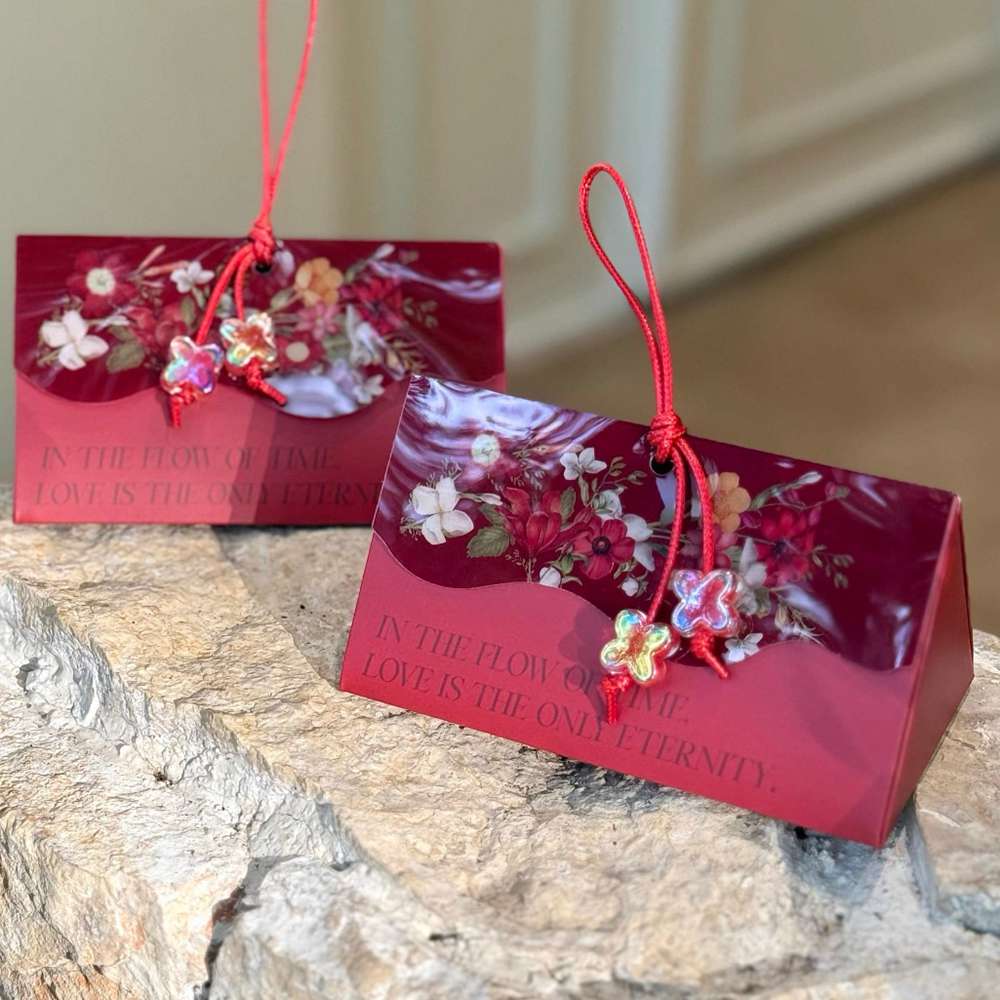
Rongchang’s Vintage Floral Triangular Paper Gift Box lists thickened specialty cardstock, a printed transparent PVC sheet, woven cotton cord and an acrylic flower charm. Its description places floral artwork on the upper section. The official photographs show the decorative upper area, a coloured lower area and a cord-and-charm presentation.
For wholesale paper boxes, that combination creates a useful specification question: where exactly is the PVC sheet, and what is printed on it? A buyer can request a component and artwork map for the offered version. This is more precise than referring to the whole front as either paper or a clear window without the supplier identifying the actual boundary.
Map the film and cardstock on an assembled reference
Send the official product image with a separate annotated copy marking the areas you want explained. Ask the supplier to identify the complete PVC sheet and the cardstock portions. Where they meet or overlap, request a view that shows the boundary clearly. Keep this as a supplier construction question rather than guessing an attachment method from reflections in the photograph.
The answer should cover the exact quoted box size and appearance. If the supplier offers more than one layout, give each a separate reference. A decorative motif can look similar while the component boundary differs. Retaining an assembled view alongside the component explanation makes the response useful to both the buyer’s artwork team and the staff approving the finished presentation.
| Panel question | Supplier response requested | Approval purpose |
|---|---|---|
| Component boundary | PVC and cardstock areas identified | Describe the actual construction |
| Artwork coverage | Printed and unprinted zones marked | Define the intended visual result |
| Orientation | Front direction and assembled reading position | Keep artwork correctly presented |
| Viewing area | Any intended clear area and applicable conditions | Clarify what the buyer expects to see |
Separate printed decoration from a clear viewing area
The supplier’s word transparent describes its sheet material, but the quoted presentation also includes printing. Ask which zones are printed and which, if any, are intended to remain clear. If visibility of a packed item matters to the buyer, describe that requirement and ask the supplier to show the offered result with an appropriate reference item.
A photograph with an apparently light or reflective area should not become an unqualified visibility specification. Request a sample view under stated viewing conditions, keeping the same offered box and panel version identified. The aim is to agree the intended presentation. It does not establish a measured optical value or prove that the product is an unprinted, fully clear package.
Confirm the artwork direction after assembly
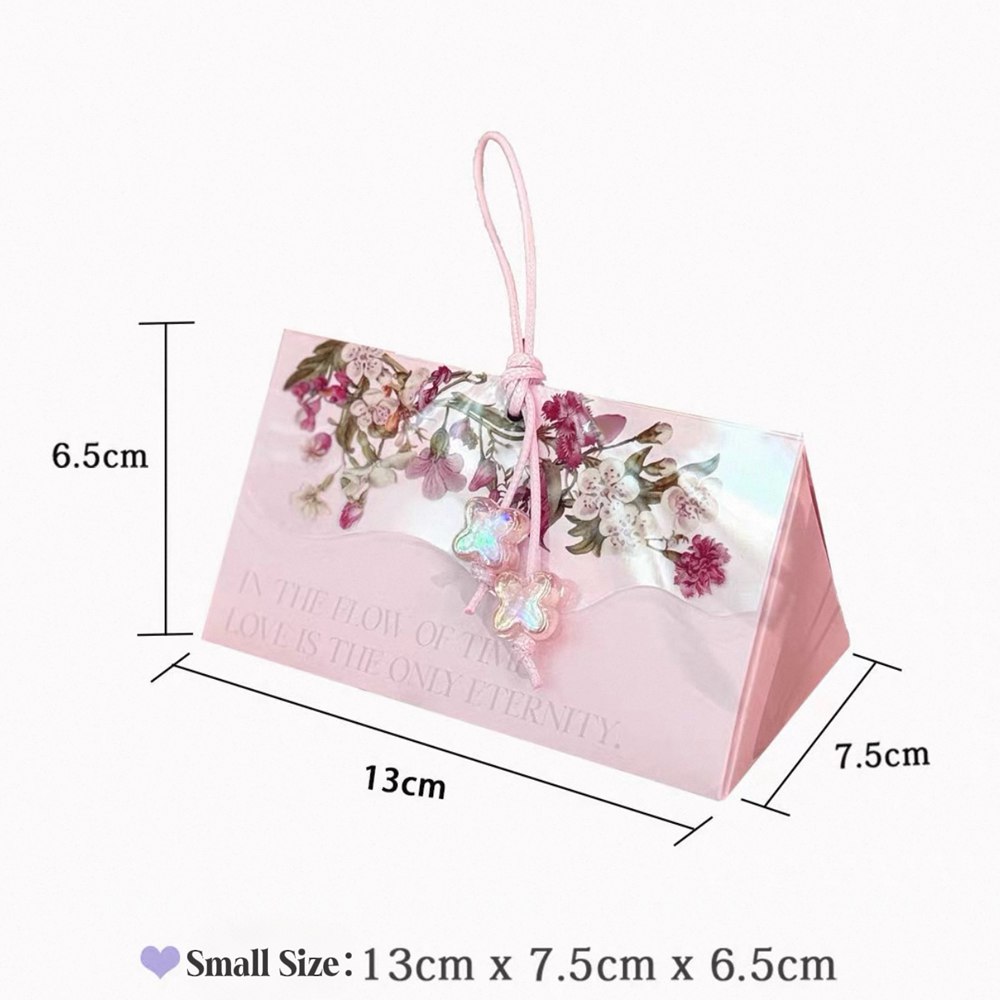
A triangular gift box has several visible surfaces, so ask how the supplier identifies the front and the artwork’s upright direction. Request the relationship between the floral zone, the lower printed wording and the cord position on the assembled version. This lets the buyer discuss the finished display rather than evaluating a flat image whose final orientation is unclear.
If the enquiry concerns customer artwork, first ask whether that scope is offered for this product. Where it is, request the supplier’s relevant artwork guide and component reference. Do not assume a custom printing service or invent artwork limits. Keep any supplier-specified printing face, alignment allowance or restricted area with the version being quoted.
Review the boundary as part of the visual sample
Ask for front, side and relevant close views of the assembled sample so the paper-film relationship can be understood. Mark the areas the buyer wants to compare, such as the visible edge between printed zones or the placement of the floral design relative to the box outline. Describe observations as appearance decisions, without assigning an unseen manufacturing process.
Where a supplier provides a proposed component drawing, compare it with the assembled reference and return any question in one marked response. A drawing that identifies the film area and a photograph that shows the assembled artwork serve complementary purposes. Keep both tied to the same size and appearance so a proof for one option is not used to approve another.
Keep the approved panel layout with the quotation
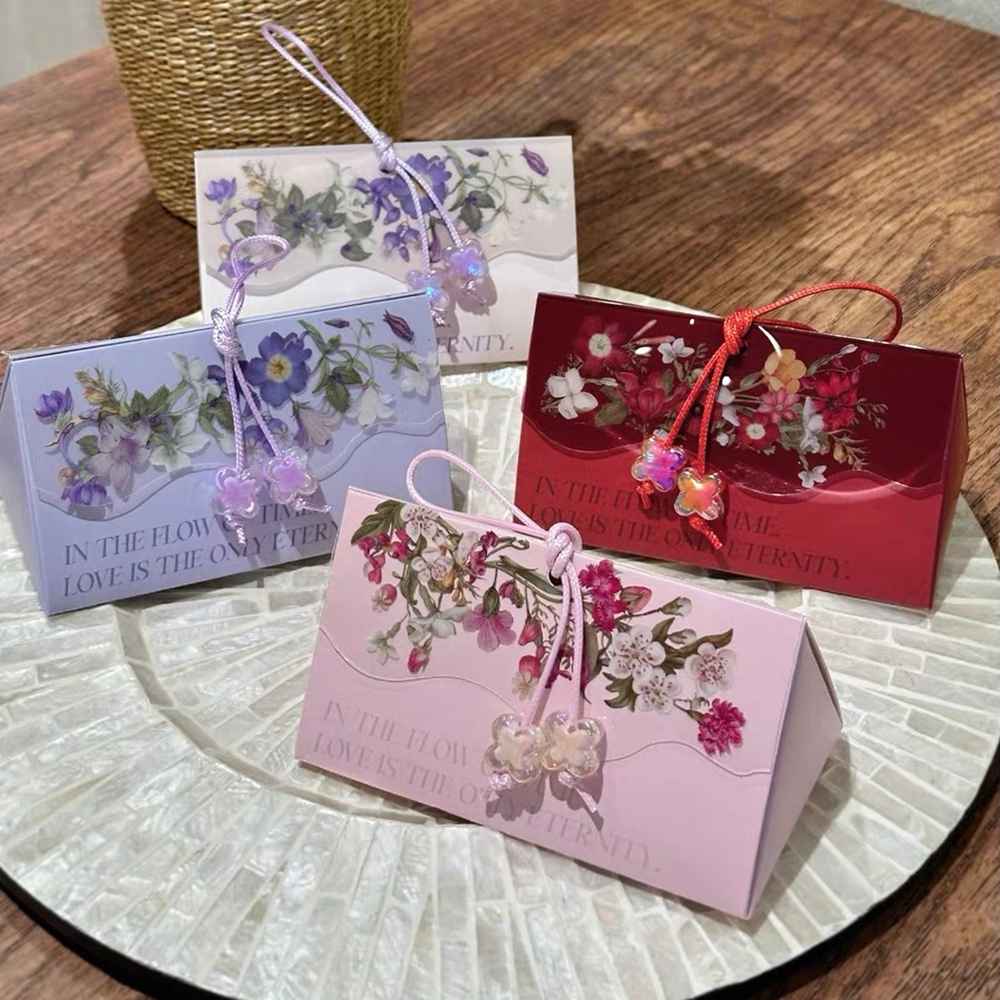
Before placing an order, retain the selected box version, supplier component map, artwork reference and assembled sample response together. Record whether the buyer accepted a stock design or a separately agreed artwork proposal. If the supplier changes the panel or printing layout, ask for an updated reference rather than assuming the earlier visual approval still covers it.
- Identify PVC and cardstock portions on the actual box.
- Mark printed zones and any intended clear area.
- Confirm the assembled artwork orientation.
- Keep drawings and sample views linked to the quoted version.
FAQ
Is the whole front of the box transparent PVC?
The materials list names a printed transparent PVC sheet alongside cardstock. Ask the supplier to locate each component instead of assigning the complete front to one material.
Does a transparent sheet guarantee visibility through the print?
Request the printed and unprinted area map and a version-specific sample reference. The material name alone does not define the finished artwork’s viewing area.
Should dimensions from the outer product chart define the film?
Outer box measurements do not identify the panel boundary. Ask for component-specific dimensions or a drawing where that detail is needed.
Find other sourcing topics in the Rongchang blog, or send the panel-specific enquiry with your selected product reference.